

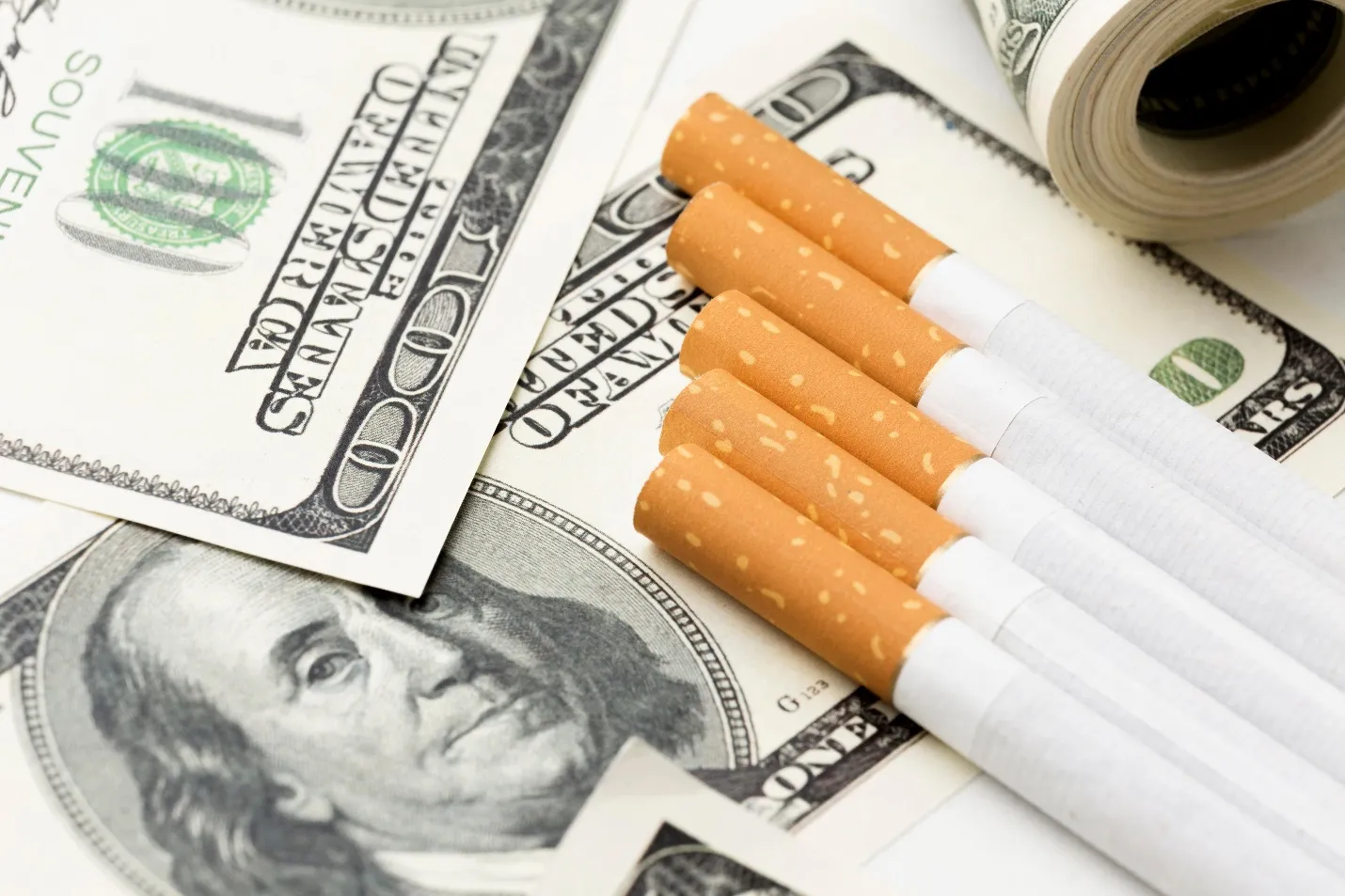

Why do cigarettes cost so much in Canada? A plain-money breakdown of taxes, markups, and how the First Nations factory-direct model cuts the bill.
Canadian smokers pay some of the highest tobacco prices in the world, and most of that money goes straight to government rather than anywhere near a tobacco leaf. If you have ever wondered why a single carton runs past $130 at a gas station while cheap native smokes made under the First Nations tax framework sell for under $30 a carton factory-direct, the answer is a layered tax-and-markup structure that adds cost at every step between the farm and your pocket.
How the Price of a Cigarette Is Built
A cigarette sold at a mainstream Canadian retailer carries cost from at least four distinct layers before it reaches the shelf.
Federal excise tax is the floor. The federal government charges a set amount per cigarette under the Excise Act, 2001. That alone accounts for a large share of the sticker price before a single provincial or retailer fee is added.
Provincial tobacco tax stacks on top. Every province levies its own tobacco tax, and the rates vary significantly from coast to coast. Some provinces also add a separate health-related surcharge. The combined federal-plus-provincial tax burden makes up roughly 65 to 75 percent of what a smoker pays at retail in most parts of Canada.
Distributor and importer markup comes next. Cigarettes sold through the mainstream channel move from manufacturer to a licensed distributor, then to a wholesaler, then to a retailer. Each party takes a margin. By the time the carton hits a convenience-store shelf, two or three layers of commercial markup have been folded into the price.
Retailer margin closes it out. Gas stations and corner stores are not charities. Tobacco is a high-turnover, high-compliance product, and retailers price accordingly.
The result: a carton of 200 cigarettes at a typical Canadian gas station routinely costs $130 or more, and in high-tax provinces it can push $150.
Where the Tax Money Goes
Canada Revenue Agency collects federal excise taxes on tobacco and directs the revenue to general consolidated funds. Provinces ring-fence some tobacco-tax revenue for health programs, though the proportion varies. Either way, the smoker bears the cost. You can review the federal framework directly on the Canada Revenue Agency — Indigenous peoples and taxes page, which also explains how the First Nations tax framework fits within the broader Canadian system.
The First Nations Factory-Direct Model
Canada’s First Nations communities operate under a distinct constitutional and tax framework. Cigarettes manufactured and sold within that system are not subject to the same provincial tobacco-tax structure that applies to mainstream retailers. This is not a loophole or a coupon — it is a recognized part of how Canadian law treats First Nations commerce.
Factory-direct selling removes the distributor-wholesaler-retailer chain entirely. The manufacturer ships straight to the customer. Both factors — the different tax treatment and the elimination of middlemen — reduce the price at the point of sale. Neither factor changes what is inside the cigarette.
|
Cost component |
Gas-station retail |
First Nations factory-direct |
|---|---|---|
|
Federal + provincial tax layer |
Full rate applied |
Different framework applies |
|
Distributor margin |
Included |
Eliminated |
|
Wholesaler margin |
Included |
Eliminated |
|
Retailer markup |
Included |
Eliminated |
|
Typical carton price |
$130 and up |
Under $30 |
|
Pack size |
20 cigarettes |
25 cigarettes |
The pack-size difference matters. A native pack contains 25 cigarettes versus the 20-cigarette retail standard. On a per-cigarette basis the savings are even larger than the sticker price suggests.
The Annual Math
Run the numbers over a year and the cost gap becomes hard to ignore.
|
Habit |
Gas-station retail (est.) |
Factory-direct native (est.) |
|---|---|---|
|
Half-pack per day (~10 cigs) |
~$2,400/year |
~$500/year |
|
One pack per day (~20 cigs) |
~$4,800/year |
~$1,000/year |
|
Pack-and-a-half per day (~30 cigs) |
~$7,200/year |
~$1,500/year |
These are rough estimates; your actual cost depends on province, brand, and buying pattern. The direction is consistent: the tax-and-markup stack at retail creates a gap that compounds quickly over months and years.
What to Know Before You Buy
A few practical points for anyone exploring the factory-direct native channel for the first time:
-
Age rules apply. Legal purchase age is 18 in some provinces and 19 in others. Sellers are required to verify age. If you are under the legal age in your province, this article is not for you.
-
It is not a health difference. Cheaper cigarettes are still cigarettes. The risk to your lungs, heart, and every other system that smoke touches is the same regardless of where the carton was made or how much you paid. Health Canada — Smoking, vaping and tobacco has straightforward guidance on what tobacco does to the body.
-
Freshness matters. Factory-direct orders often ship sooner after production than retail stock that has sat in a warehouse chain for weeks. Check your order when it arrives; a fresh cigarette pulls and burns differently from stale stock.
-
Know what you are ordering. Native cartons typically contain 200 cigarettes (8 packs of 25). Read the product description before checking out so there are no surprises.
FAQ
Are native cigarettes legal to buy in Canada?
Yes. Cigarettes made and sold within the First Nations system under Canada’s constitutional framework are legal. The lower price reflects a distinct tax structure and direct-to-consumer selling, not any kind of unauthorized grey market.
Why is the pack size 25 instead of 20?
Native manufacturers use 25-cigarette packs as a standard. This is simply a different packaging convention — it means the per-cigarette price is even lower relative to the carton price than a direct sticker comparison suggests.
Is it safe to order cigarettes online in Canada?
Ordering from a licensed factory-direct seller is straightforward. Reputable sellers collect age verification and ship in plain packaging. The safety concern with any tobacco purchase is the tobacco itself, not the delivery method.
Do cigarette taxes ever change?
Yes. Federal excise rates are adjusted periodically and provincial rates change with annual budgets. The Canada Revenue Agency publishes current rates. The general direction over the past two decades has been upward.
Does buying cheaper cigarettes reduce health risk?
No. Cost and risk are unrelated. The Centers for Disease Control and Prevention — Smoking and Tobacco Use documents the health effects of tobacco use comprehensively. Price is a financial consideration only.
A quick honest note
No cigarette is safe. The tar, carbon monoxide, and thousands of other compounds in tobacco smoke cause cancer, heart disease, stroke, and lung disease regardless of where the cigarette was manufactured or what it cost. Quitting is the only action that removes the health risk. If you are ready to explore quitting, Health Canada’s cessation resources are a practical starting point. If you continue to smoke and want to manage the financial cost, understanding the tax-and-markup structure above helps you make informed decisions. Tobacco products are for adults only — age 18 or 19 depending on your province.
References
-
Canada Revenue Agency: Taxes and benefits for Indigenous peoples. https://www.canada.ca/en/revenue-agency/services/indigenous-peoples.html
-
Health Canada: Smoking, vaping and tobacco. https://www.canada.ca/en/health-canada/services/smoking-tobacco.html
-
Centers for Disease Control and Prevention: Smoking and Tobacco Use. https://www.cdc.gov/tobacco/