Building Strong Foundations: The Essential Guide to Retaining Walls
Sloped properties present unique challenges and opportunities for homeowners. While hillside lots offer stunning views and interesting topography, they also create problems with erosion, limited usable space, and landscape maintenance difficulties. Professional retaining wall construction solves these issues while adding functional beauty to your property. These structures do much more than hold back soil—they create level areas for gardens, patios, driveways, and outdoor living spaces while preventing erosion that could damage your home’s foundation.
Understanding the forces at work helps explain why retaining wall design and construction require professional expertise. Soil exerts tremendous lateral pressure against walls, especially when saturated with water. This pressure increases exponentially with wall height and soil weight. A poorly designed or constructed wall will eventually fail—bulging, cracking, or completely collapsing. Professional contractors calculate these forces accurately and engineer walls that withstand them for decades.
Material selection depends on your aesthetic preferences, budget, wall height, and site conditions. Natural stone creates timeless beauty with irregular patterns that blend organically into landscapes. Concrete blocks offer strength and versatility with numerous color and texture options that can mimic natural stone at lower costs. Poured concrete provides maximum strength for tall walls but typically requires decorative facing for visual appeal. Timber works well for shorter decorative walls in informal settings but has limited lifespan compared to masonry options.
Height considerations determine whether your project requires engineering oversight. Walls under four feet often can be built following standard construction practices, though even these benefit from professional design. Walls exceeding four feet typically require engineering calculations, structural drawings, and permits. Some jurisdictions set even lower thresholds for engineering requirements. The consequences of wall failure—property damage, injury risk, and liability—make professional design worth the investment regardless of height.
Drainage is absolutely critical to retaining wall longevity. Water accumulating behind walls increases pressure dramatically and causes premature failure. Professional installations include multiple drainage components working together: gravel backfill that allows water to percolate downward, perforated drainage pipes that collect and redirect water, and weep holes that release any accumulated moisture. Studying soil drainage mechanics reveals why these elements matter so much.
Foundation preparation sets the stage for wall stability. The base must sit on undisturbed soil or properly compacted fill, never on organic material or loose dirt. Contractors typically excavate below frost line in cold climates to prevent heaving during freeze-thaw cycles. A leveling pad of compacted gravel creates a stable, draining base that prevents settling. Corner this step and your wall begins failing before construction even finishes.
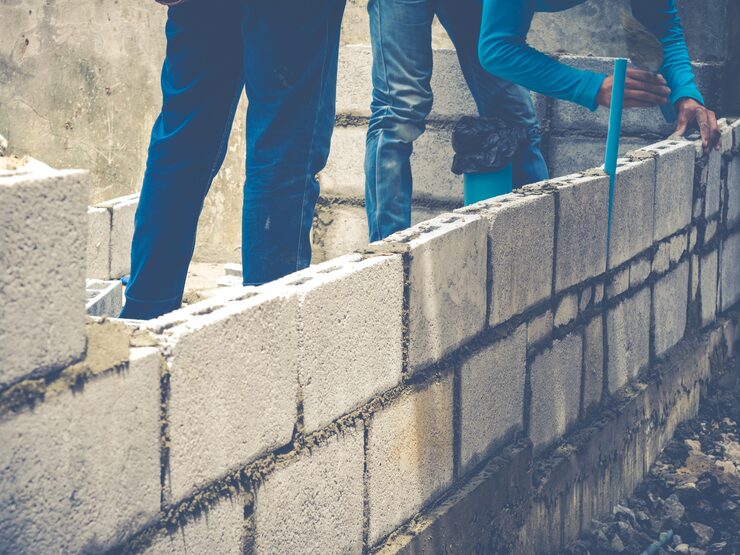
Proper installation techniques ensure structural integrity throughout the wall. The first course must be perfectly level—any deviation compounds with each subsequent row. Blocks or stones should be offset in running bond patterns that distribute loads evenly. Walls taller than three to four feet often incorporate geogrid reinforcement layers that anchor back into the hillside, effectively extending the wall’s footprint and dramatically increasing stability. Professional masons understand these critical details.
Backfill material composition affects both drainage and stability. Clean gravel or crushed rock drains freely while providing support. Native soil, especially clay, holds water and increases pressure. The backfill extends back from the wall at least twelve inches before transitioning to native soil. Compaction happens in layers—overfilling and compacting all at once creates uneven support that compromises wall integrity.
Terracing allows construction of usable space on steep slopes that would otherwise require impossibly tall single walls. Multiple shorter walls arranged in steps each retain manageable soil heights while creating distinct planting beds or level areas. This approach distributes lateral forces across multiple structures, reduces material costs compared to single tall walls, and creates more interesting landscape designs. Learning about slope stabilization methods provides additional perspective.
Top caps and finishing touches complete retaining walls both functionally and aesthetically. Capstones protect the wall top from water infiltration while providing finished surfaces safe for sitting. They’re typically adhered with construction adhesive for security. Some designs incorporate lighting, either mounted on walls or embedded in caps, creating dramatic nighttime effects while improving safety.
Landscape integration helps retaining walls feel intentional rather than imposed. Planting beds along wall bases soften hard edges with cascading plants, colorful flowers, or ornamental grasses. Plantings atop walls can drape attractively over edges. Coordinating wall materials with existing hardscape elements—matching stone types or color schemes with your home’s exterior—creates cohesive design.
Retaining walls represent significant investments that require professional expertise for lasting success. When designed and built correctly, they solve functional problems while enhancing your property’s beauty and usability for generations.