
Platelet-Rich Plasma (PRP) Therapy: The Perfect Transplant Partner?
In the world of hair restoration, surgery is often viewed as the main event—the “big fix.” However, experienced surgeons know that a successful result relies not just on the movement of follicles, but on the biological environment in which those follicles are placed. This understanding has led to the widespread adoption of adjuvant therapies, most notably Platelet-Rich Plasma (PRP). Often offered as an add-on or a standalone treatment, PRP has gained a reputation as the “fertilizer” for your new hair. But what exactly is it, and is it truly necessary for a successful transplant?
The Science of “Liquid Gold”
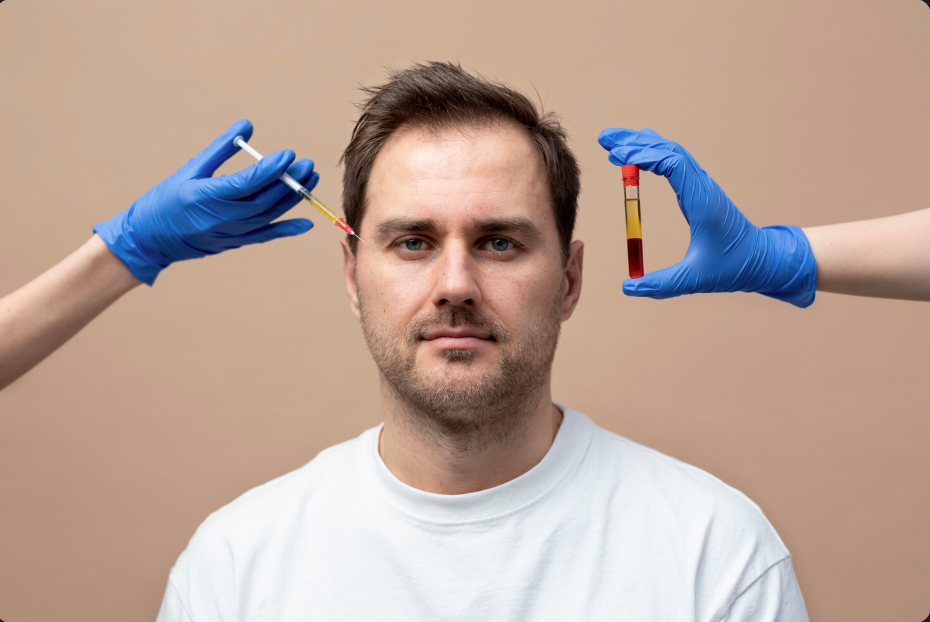
PRP therapy is a three-step medical treatment in which a person’s blood is drawn, processed, and then injected into the scalp. The science behind it is rooted in the body’s natural healing mechanisms. Our blood is composed primarily of liquid (plasma) and solids (red cells, white cells, and platelets). Platelets are best known for their importance in clotting blood, but they also contain hundreds of proteins called growth factors. These growth factors are critical for healing injuries and regenerating tissue.
To create PRP, a small amount of blood (similar to a routine lab test) is drawn from the patient’s arm. This blood is then spun in a centrifuge at high speeds. The centrifugal force separates the blood components based on density. The red blood cells sink to the bottom, while the plasma, now rich in platelets (up to 5 to 10 times the normal concentration), rises to the top. This golden-colored fluid is then extracted and injected directly into the scalp at the level of the hair follicles.
Accelerating the Healing Process
When used in conjunction with a hair transplantation, PRP serves a dual purpose. The first is immediate healing. A hair transplant involves thousands of tiny incisions in the recipient area and extraction sites in the donor area. These are, by definition, wounds. Injecting growth factors into these areas kickstarts the body’s repair process.
Patients who receive PRP treatment during or immediately after surgery often experience faster tissue regeneration. The growth factors stimulate the production of collagen and new blood vessels (angiogenesis). This increased vascularity ensures that the newly implanted grafts receive a robust supply of oxygen and nutrients during the critical first few days when they are most vulnerable. Consequently, many patients report reduced redness, less scabbing, and a shorter overall recovery time.
Boosting Graft Survival and Growth
Beyond healing the skin, the primary goal of PRP is to maximize the survival rate of the transplanted follicles. The trauma of being moved can cause some follicles to go dormant or, in rare cases, fail to take root. The concentrated growth factors in PRP act as a biological signal to the hair follicle cells, promoting them to enter the active growth (anagen) phase and prolonging their survival.
While PRP cannot resurrect a dead follicle, it can revitalize a weak one. This is particularly beneficial for the native hair surrounding the transplant. Many patients suffer from miniaturization—where existing hairs are thinning and becoming whispy due to genetic balding. PRP can thicken these miniaturized hairs, increasing the overall density of the hair without the need for more grafts. This “halo effect” helps blend the transplanted hair seamlessly with the existing hair.
A Standalone Treatment for Maintenance
PRP is not a one-and-done miracle cure. While a single session during surgery provides a significant boost, most clinics recommend a series of treatments to maintain the results. Typically, a course involves 3 to 4 sessions spaced about a month apart, followed by maintenance sessions every 6 to 12 months.
For patients who are not yet ready for surgery or who have early-stage thinning, PRP can be an effective standalone therapy to slow down hair loss and improve hair caliber. It is a natural alternative to pharmaceutical options like minoxidil or finasteride, making it an attractive choice for those wary of medication side effects.
Is It Worth the Investment?
The efficacy of PRP varies from person to person. Factors such as the patient’s overall health, platelet count, and the specific preparation method used by the clinic all play a role. However, the consensus in the medical community is that PRP offers a statistically significant benefit in graft preservation and hair thickening.
At premium clinics like Gold City, PRP is often integrated into the standard surgical package rather than sold as an expensive extra. This reflects the belief that optimal results should be the baseline, not an upgrade. When researching Hair transplantation, ask if PRP is included. It is a strong indicator that the clinic is invested in the long-term health of your hair, not just the surgery itself.
The Synergistic Approach
Ultimately, a hair transplant provides the “seeds,” while PRP provides the “fertilizer.” While you can grow a garden without fertilizer, the results are almost always lusher, stronger, and more resilient with that extra biological support. By combining surgical precision with regenerative medicine, patients can ensure they are giving their new investment the best possible environment to thrive.